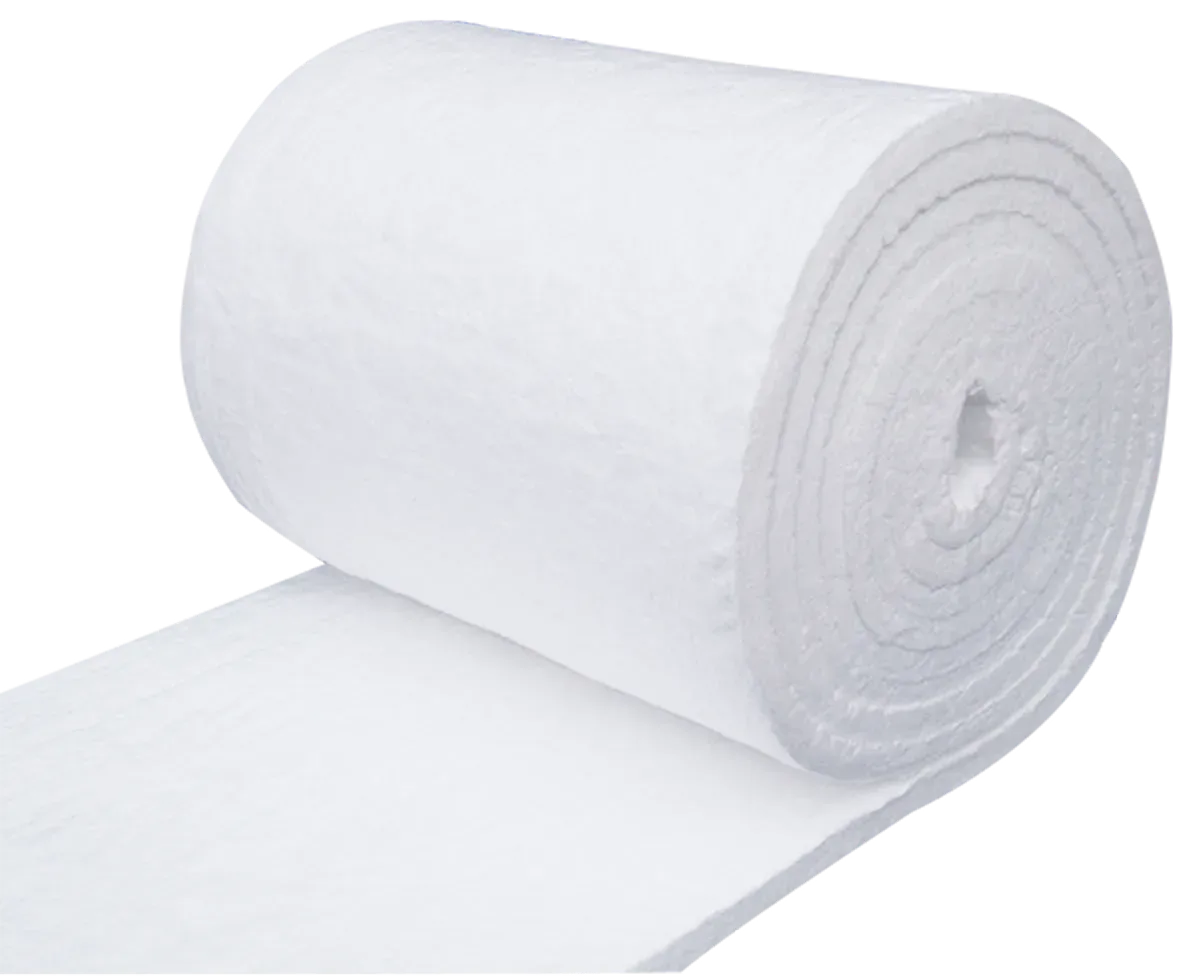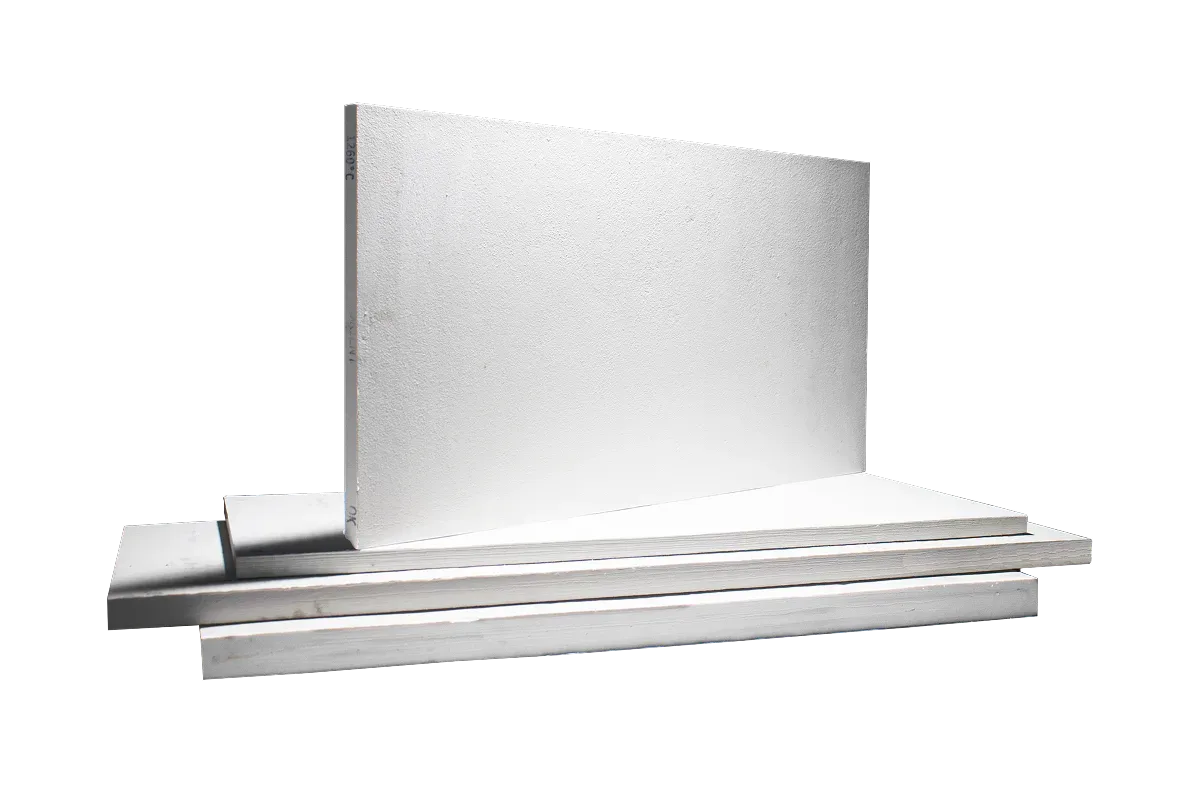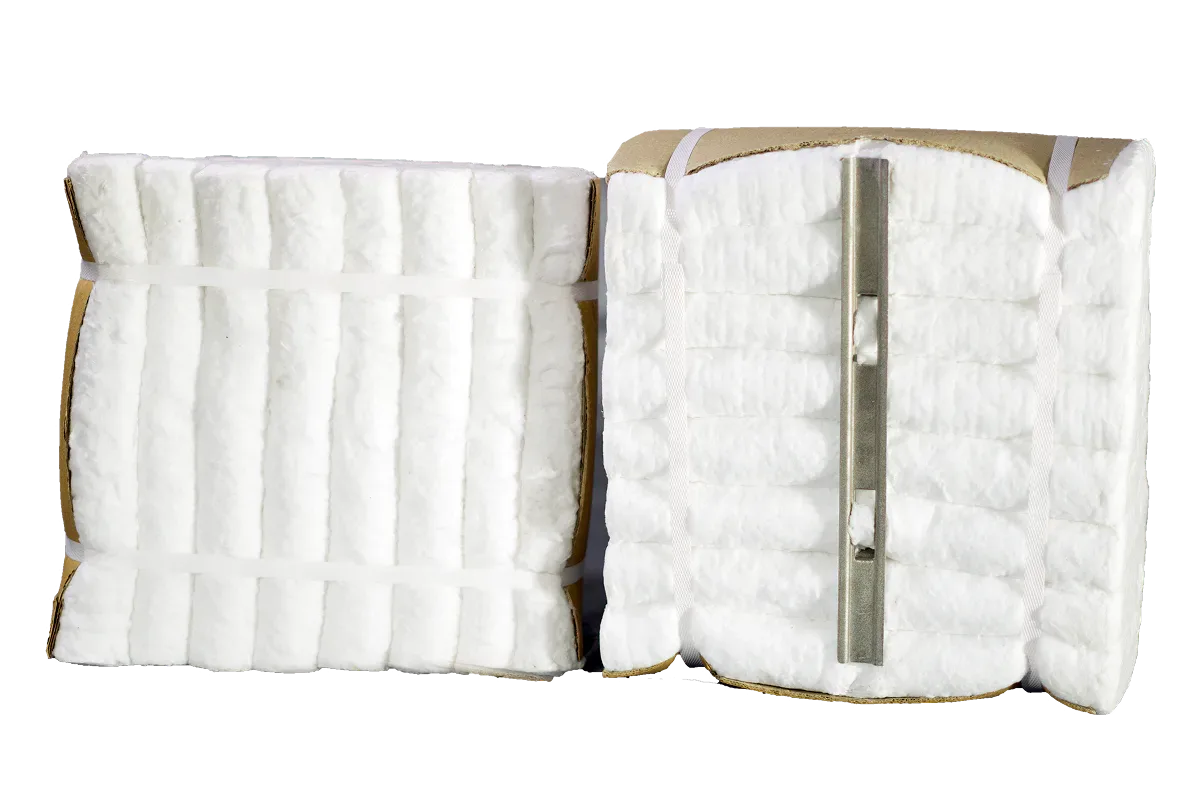
The short answer. Ceramic fiber insulation uses fine, heat-resistant fibers to slow heat flow in industrial equipment. Refractory ceramic fiber (RCF) is a common alumina-silicate family. Blanket, board and modules turn that material into different practical forms, so selection starts with how the insulation will be fitted, supported and exposed.
What does “ceramic fiber” describe?
Think of ceramic fiber insulation as a material family rather than one finished product. Manufacturers form fine fibers into lightweight insulation with spaces between them. The resulting structure resists heat flow without the mass of a dense refractory lining. It remains part of an engineered thermal system, not a complete furnace design by itself.
RCF stands for refractory ceramic fiber. Traditional RCF products are based on alumina and silica; particular grades may contain additional constituents. Other high-temperature fiber families include alkaline-earth-silicate fibers and polycrystalline fibers. Similar-looking products can therefore have different chemistry, service limits and handling requirements. Confirm the actual composition instead of relying only on the phrase “ceramic wool.”
Two useful properties are thermal conductivity and heat storage. Conductivity describes how readily heat passes through a material; heat storage concerns the energy held as it warms up. Low heat storage can help in equipment that heats and cools repeatedly, but total operating performance depends on the entire lining and process.
One family. Different working forms.
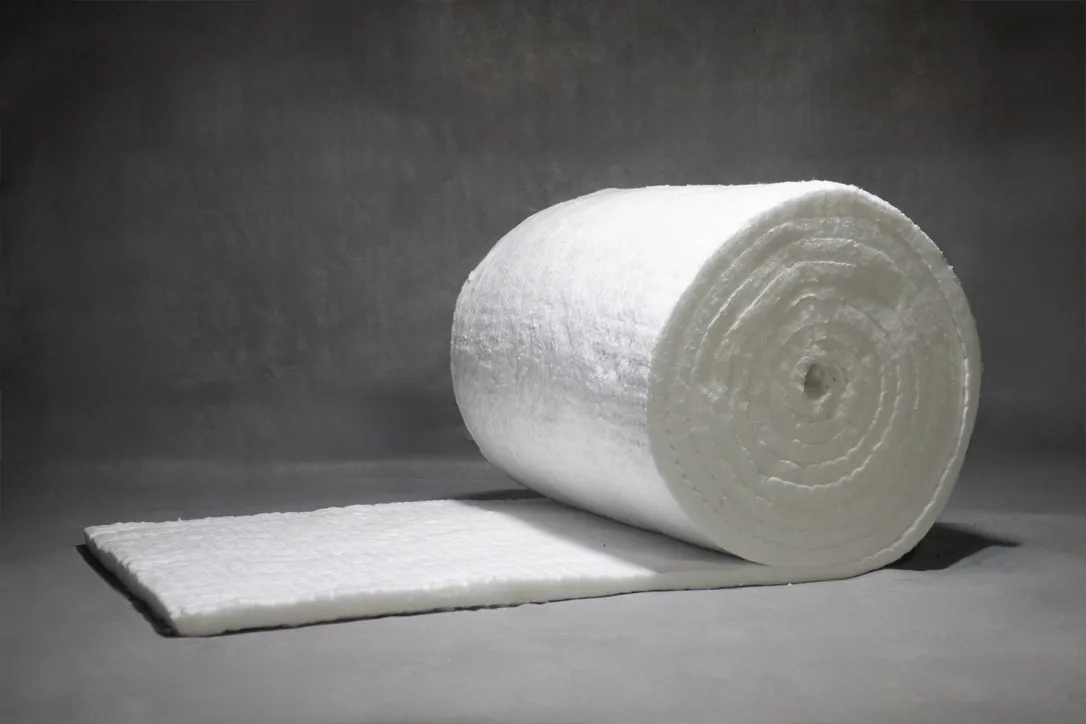
Blanket
Flexible layersCurves, wraps and supported linings
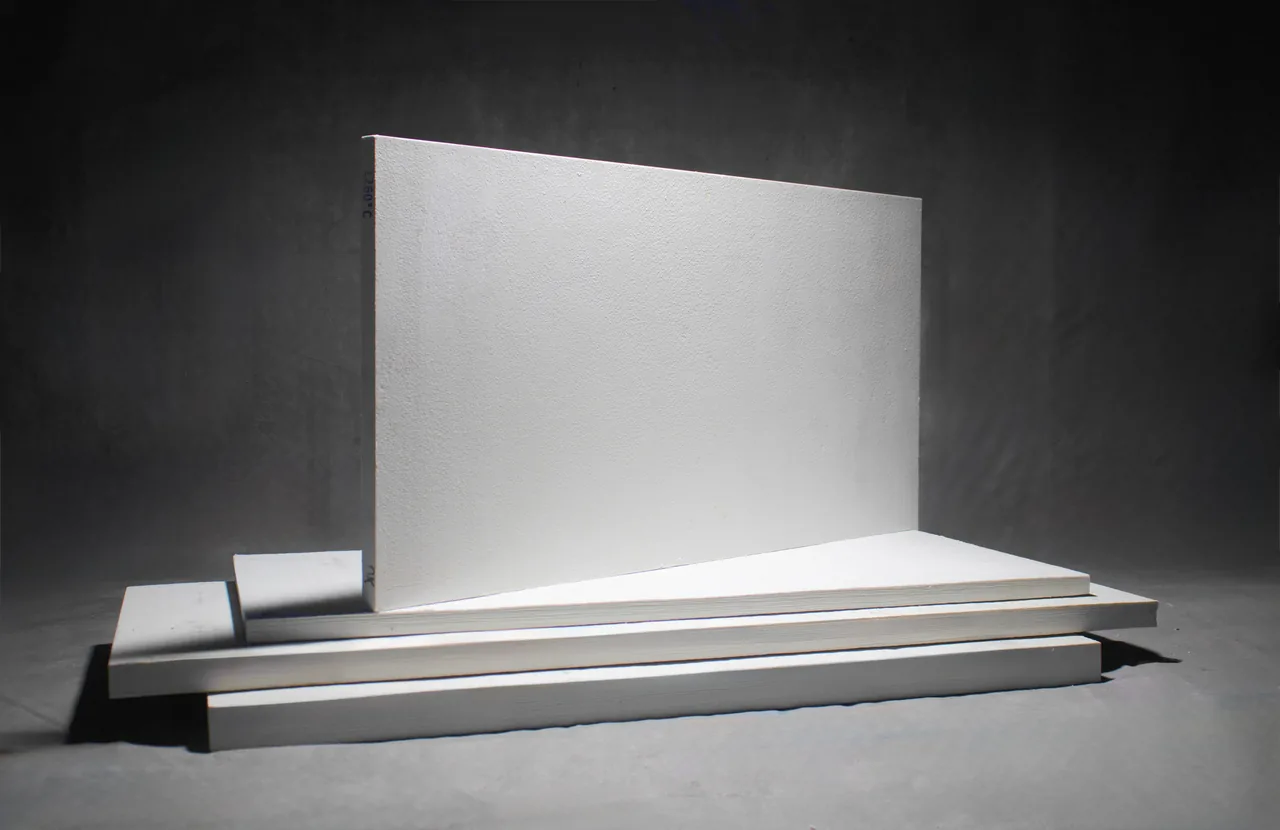
Board
Rigid panelsCut shapes, baffles and flat surfaces
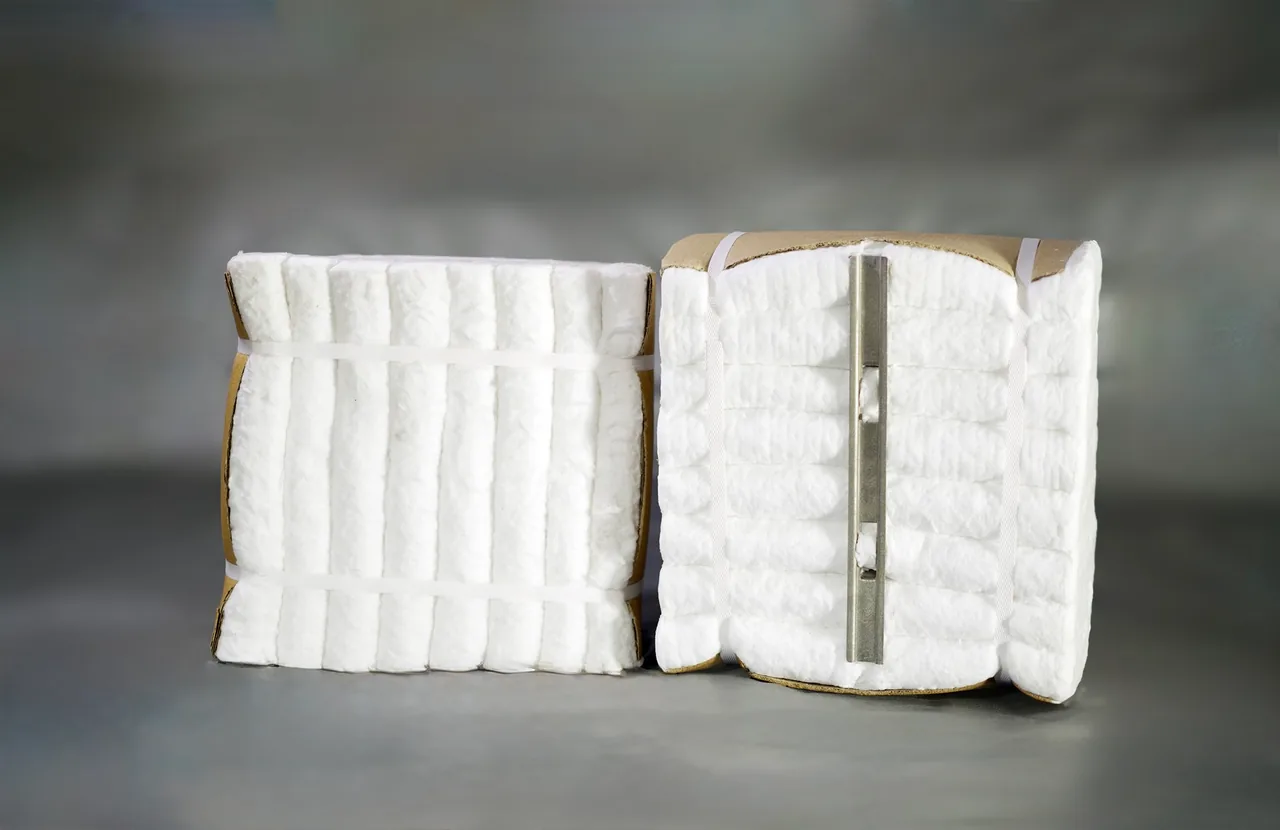
Modules
Anchored lining unitsEngineered furnace and kiln linings
Blanket is a flexible fibrous mat, typically supplied in rolls or sheets. It can be cut and layered around suitable surfaces, making it useful for supported linings, doors, seals and curved details. Installed compression, joints and attachment must match the design.
Board provides a more rigid panel. It can be considered for flat lining sections, backup insulation, baffles and shaped components. Its ability to retain a shape does not make it a structural building board or automatically qualify it for load-bearing duties.
Modules assemble fiber into lining units with an attachment arrangement. They are used in engineered furnace and kiln systems where module layout, joint treatment and anchors are part of the specification. They require more project detail than simply choosing a roll thickness.
Paper, bulk fiber, textiles and formed shapes also exist in the wider market. They meet different sealing, fabrication or component needs. This guide introduces those forms for context; Ranipa’s current ceramic fiber product pages focus on blanket, board and modules.
Where the material can help.
Common application discussions include heat-treatment furnaces, ceramic kilns, process heaters, doors and high-temperature ducts. Different positions within the same equipment may need different forms. A wall lining, removable cover and small fabricated baffle should not automatically receive the same specification.
- Thermal insulation: suitable fiber layers can reduce heat escaping through an enclosure.
- Lower lining mass: lightweight products can reduce the weight of some lining arrangements.
- Adaptable installation: flexible mats, rigid panels and anchored units address different geometries.
- Cyclic operation: low heat storage can be useful when equipment repeatedly warms up and cools down.
These are material benefits, not guaranteed savings. Fuel use, shell temperature and service life need evaluation for the installed system, production schedule and maintenance condition.
Choose the grade and the form together.
Start with continuous operating temperature, peak exposure, time at temperature and process atmosphere. Then describe gas movement, chemicals, vibration, abrasion and any contact with the product being heated. These conditions can change the suitable fiber chemistry, protective details and installation method.
Classification temperature is not a promise of continuous service at that temperature. Ask for the selected grade’s technical data, shrinkage information and recommended conditions. Compare thermal conductivity at relevant temperatures, rather than assuming that a denser or thicker-looking product performs better.
Also check the installation space, required outer-surface temperature, supporting surfaces, joints and penetrations. Fiber is not a universal replacement for dense brick, castable or an insulating brick system. Handling, cutting and maintenance must follow the specific product’s current safety data sheet and workplace controls.
Common questions
Is all ceramic fiber insulation RCF?
No. RCF names a particular fiber family. Suppliers also offer other high-temperature fiber chemistries. Specify the composition and grade when comparing products.
Can I replace blanket with a module of the same thickness?
Not directly. A module changes anchoring, layout, compression and joint details. Review the complete lining arrangement before substitution.
What information should I send with an enquiry?
Include equipment type, normal and peak temperatures, atmosphere, lining position, dimensions, quantity and destination. Drawings are especially useful for modules and shaped boards.
For the next selection step, read ceramic fiber blanket versus board.
Sources & review
By Ranipa Enterprise LLP · Published 13 September 2026
Technical reviewer: Not yet assigned · Technical review pending
Source references checked: 11 October 2026. Technical review date: Pending.
- NUTEC — Products and engineering — Overview of blankets, boards, papers and modules.
- Morgan Thermal Ceramics — Boards and shapes — Fiber families, board forms and application examples.
- Morgan Thermal Ceramics — Module systems — Module construction and furnace lining applications.
- Ranipa — Ceramic fiber blanket technical data — Specifications for the supplied blanket range.
Educational guide. Application recommendations require the selected product’s current technical and safety data and a suitable lining design.