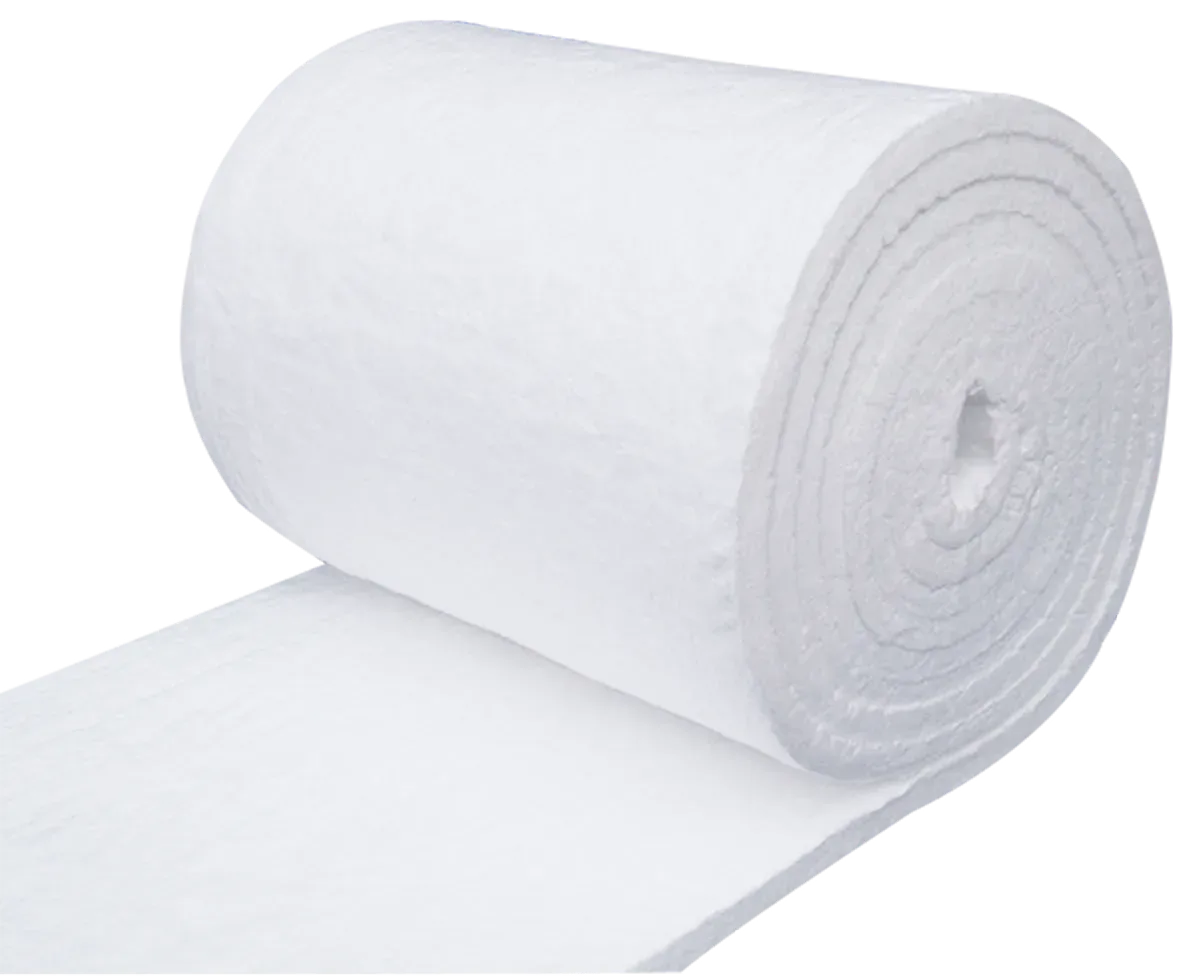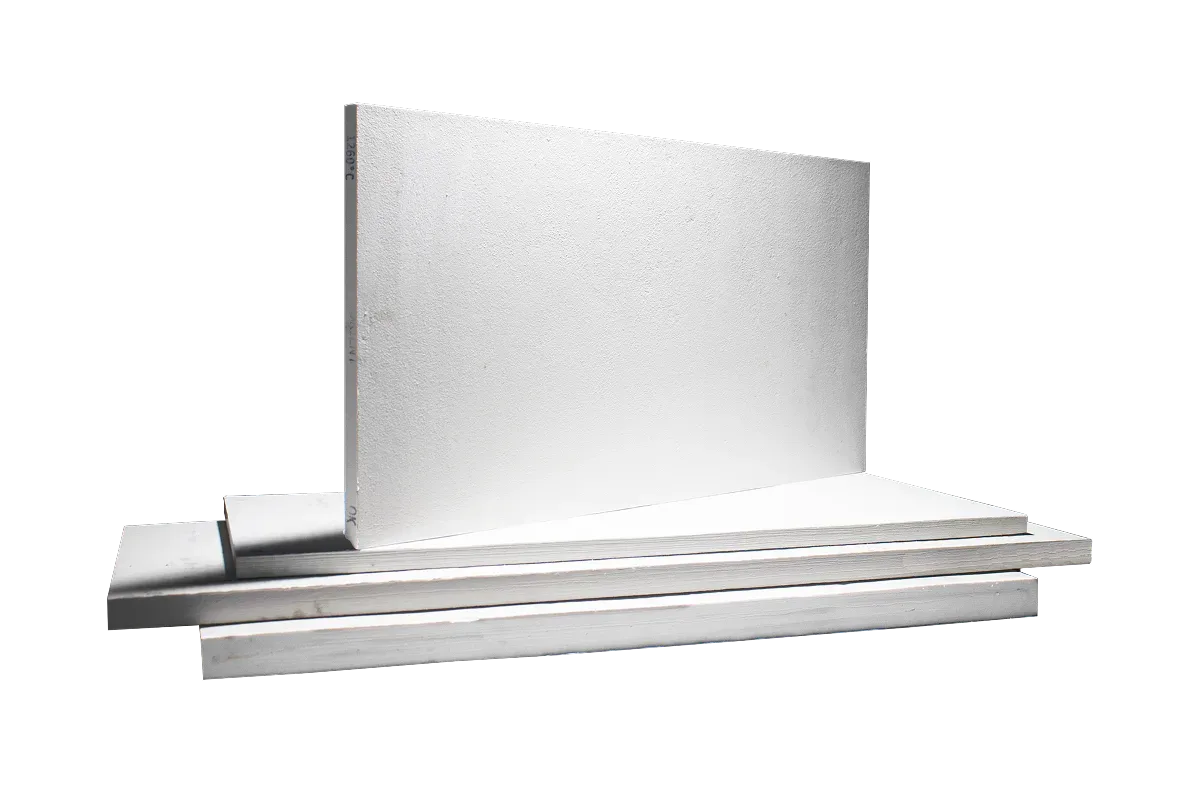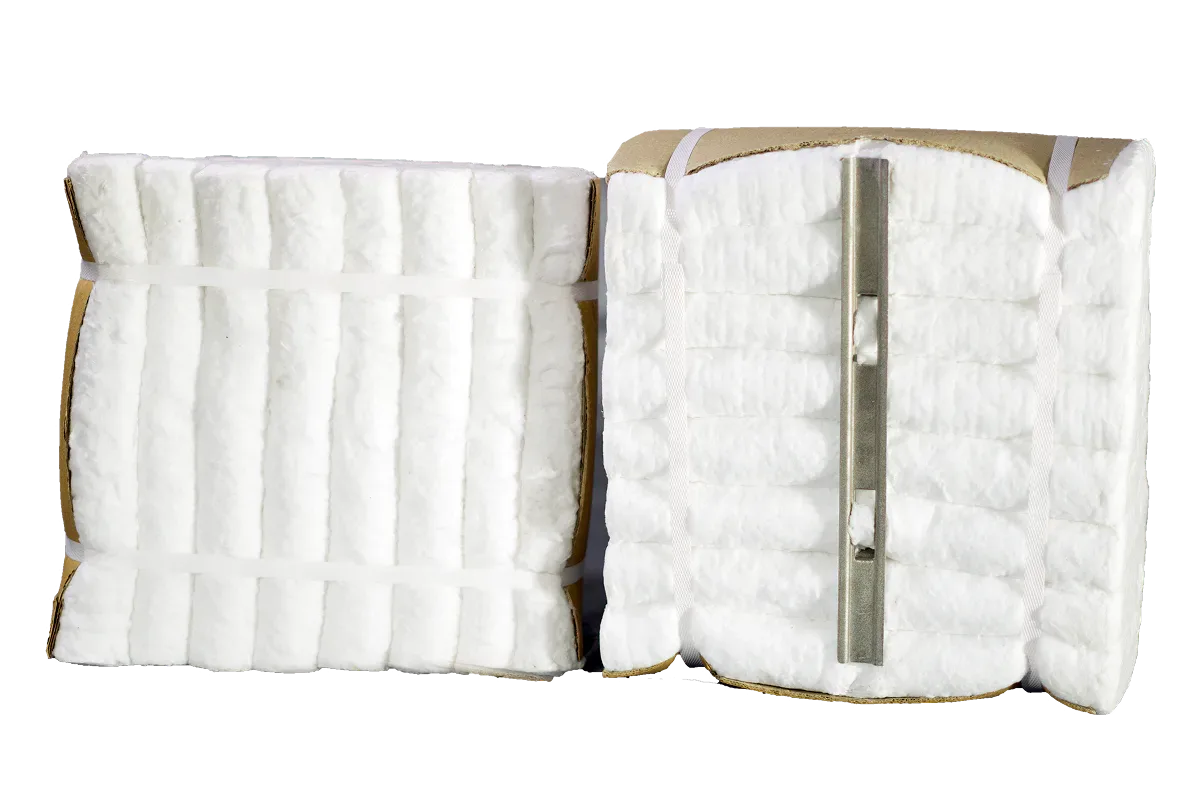
The short answer. Ceramic fiber blanket is flexible and suits wraps, layered insulation and supported curved details. Ceramic fiber board is rigid and suits panels and fabricated shapes. Neither form is universally better: compare the actual grade, thermal data, exposure and installation requirements before choosing.
Flexibility and rigidity solve different problems.
Both products can belong to the refractory ceramic fiber (RCF) family, yet their physical forms change how they are handled. Blanket behaves as a mat that can conform to suitable surfaces. Board is supplied as a panel that retains its shape and can be cut for a defined geometry.
That difference is often the most useful starting point. A curved enclosure may benefit from flexible layers, while a flat baffle needs a more stable shape. Temperature capability does not follow automatically from either form: blanket and board are made in different grades, densities and formulations.
For example, a drawing that calls for a thin panel fitted into a frame is describing more than an insulation thickness. It also implies dimensional fit, edge support and joint details. Replacing that panel with loose blanket could change the assembly even if the nominal temperature rating appears similar.
Compare the form before comparing the grade.
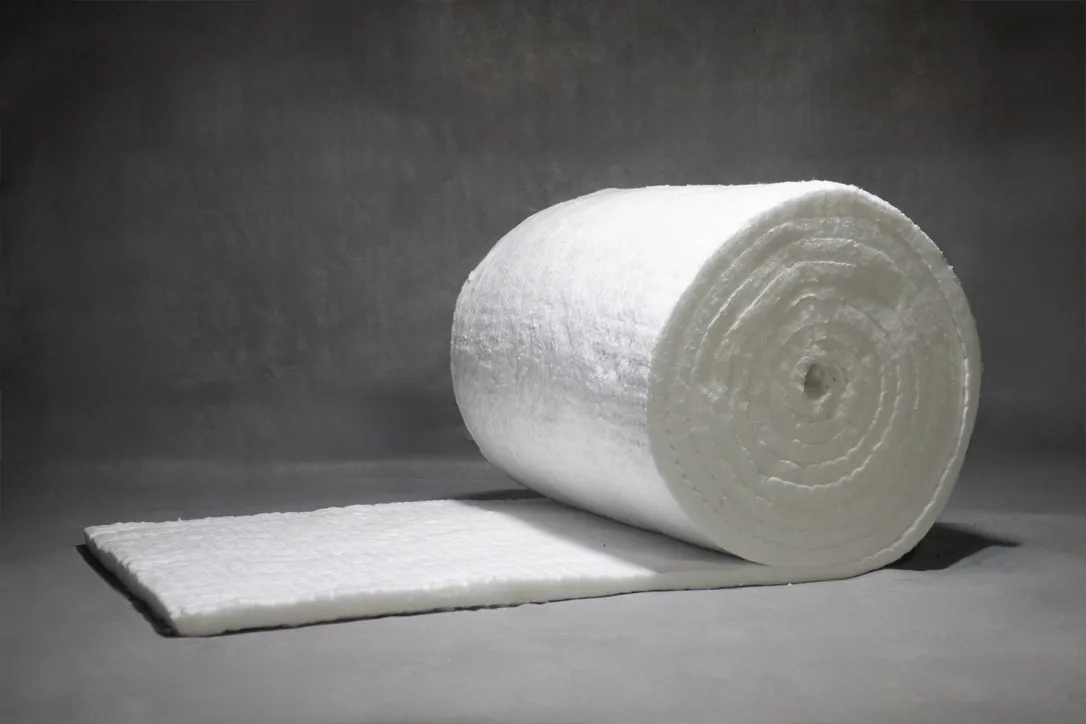
Blanket
Flexible layersCurves, wraps and supported linings
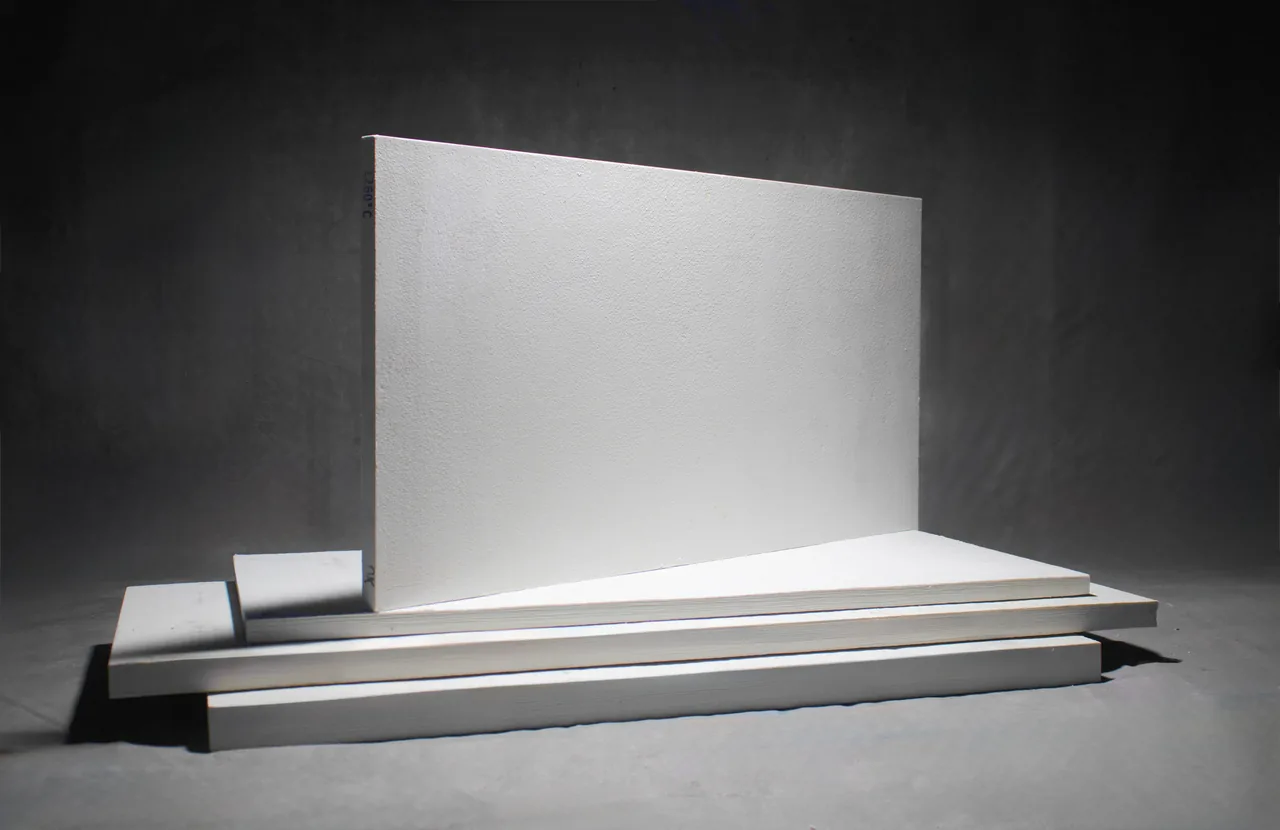
Board
Rigid panelsCut shapes, baffles and flat surfaces
| Selection point | Blanket | Board |
|---|---|---|
| Physical form | Flexible mat or roll | Rigid panel |
| Geometry | Can follow suitable curves | Suited to flat or cut shapes |
| Installation | Layer support, attachment and compression | Panel support, edge fit and joint treatment |
| Performance check | Grade-specific thermal and service data | Grade-specific thermal, strength and service data |
Where each form earns its place.
Blanket is often considered for layered furnace insulation, doors, removable covers, seals and selected high-temperature ducts. Its flexibility can simplify fitting around an irregular detail. It still needs a suitable attachment and protection arrangement, particularly where movement or gas flow might disturb the fibers.
Board is often considered for backup insulation, flat lining details, baffles and fabricated components. A defined panel shape can help where a drawing needs an accurate opening or edge. Support spacing, fasteners and cutting details must respect the chosen board’s properties.
They may also work together. A lining or enclosure can use blanket where flexibility is useful and board where geometry needs to stay defined. Choosing complementary forms can solve practical installation problems, but the assembly’s heat flow and mechanical behavior must still be checked.
Both can provide lightweight insulation and relatively low heat storage compared with a dense refractory arrangement. The meaningful comparison is between specified products in a proposed lining, not between two generic product names.
Five checks before making a substitution.
- Match the exposure. Record normal and peak temperatures, atmosphere, exposure duration and cycling.
- Compare thermal data. Use conductivity values at comparable temperatures and the proposed installed thickness.
- Review mechanical conditions. Describe gas velocity, vibration, abrasion, contact loads and supporting surfaces.
- Check installation details. Confirm joints, anchoring, compression where relevant, tolerances and penetrations.
- Read product documents. Use the actual grade’s technical sheet, safety data and installation guidance.
Board is not automatically suitable for a loaded floor or a wear-exposed surface merely because it is rigid. Blanket should not be expected to remain in place without the necessary support. Neither assumption follows from a photograph or a density figure.
Some board formulations include binders. Ask whether their behavior during initial heating affects handling, commissioning or ventilation requirements. Likewise, confirm shrinkage and joint provisions for the selected products. The lowest purchase price may not be the lowest installed cost once supports, fabrication, waste and maintenance are considered.
Common questions
Which insulates better: blanket or board?
There is no universal winner. Compare the exact grades’ conductivity at relevant temperatures, installed thicknesses and joint details. Form alone does not determine heat loss.
Can ceramic fiber board carry equipment loads?
Do not assume so. Check strength, temperature-dependent behavior, support details and the intended duty with the responsible designer.
Can blanket and board be used in the same lining?
Yes, where the design assigns each an appropriate role. Confirm the temperature profile, attachments, interfaces and exposure of every layer.
Explore the blanket and board product pages for Ranipa’s enquiry information and technical downloads.
Sources & review
By Ranipa Enterprise LLP · Published 27 September 2026
Technical reviewer: Not yet assigned · Technical review pending
Source references checked: 11 October 2026. Technical review date: Pending.
- NUTEC — MaxWool 2600 blanket — An example RCF blanket; its ratings apply to that specific product.
- Morgan Thermal Ceramics — Boards and shapes — Fiber families, board forms and application examples.
- Ranipa — Ceramic fiber blanket technical data — Blanket specification reference.
- Ranipa — Ceramic fiber board technical data — Board specification reference.
Educational guide. Application recommendations require the selected product’s current technical and safety data and a suitable lining design.